CORROSION RISK
Extreme Environments
H₂S and SO₂ corrode sensors and structural components rapidly, cutting operational life short.
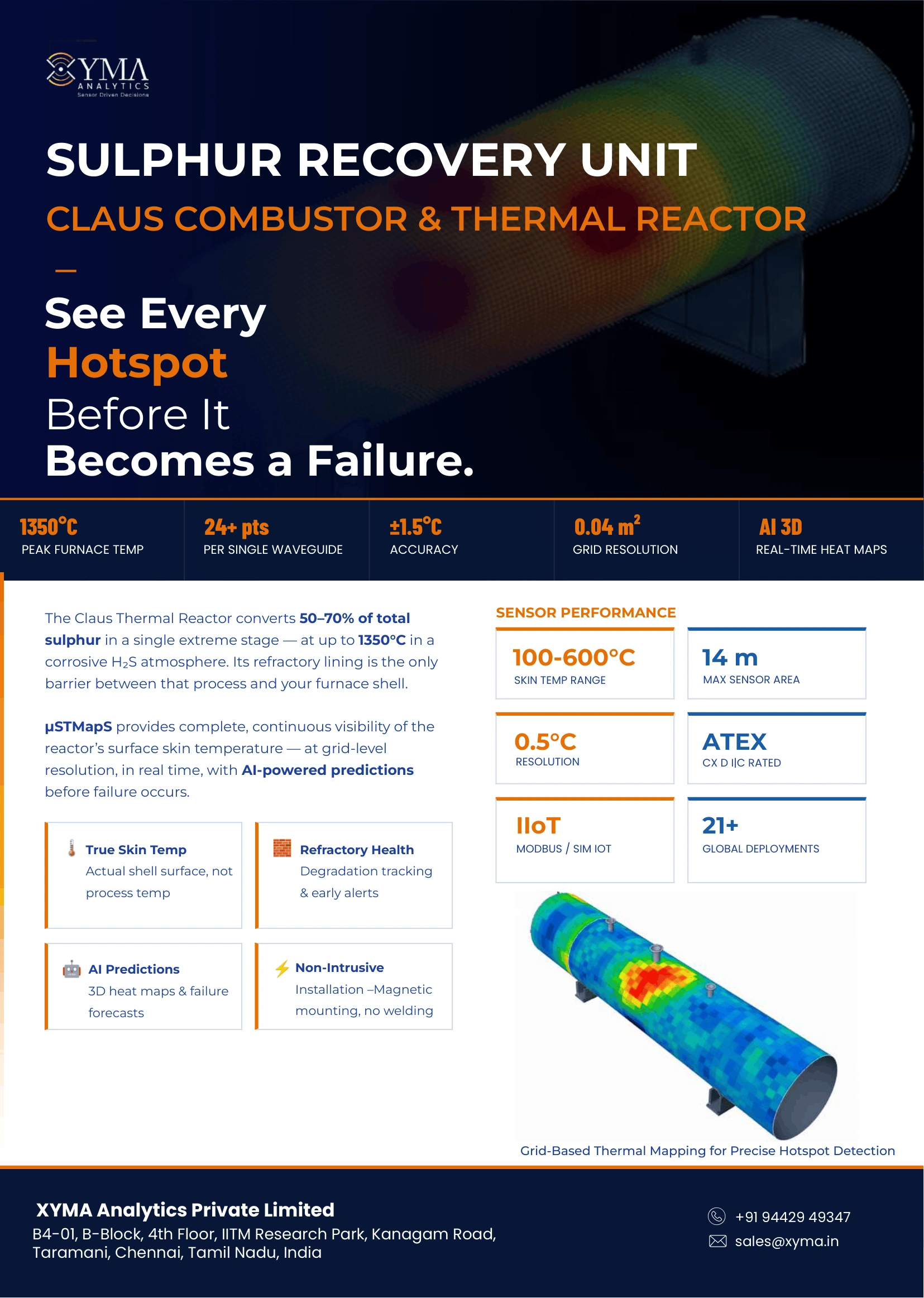
AI-powered real-time hotspot detection for Claus Combustors & Thermal Reactors operating up to 600°C.
Prevent refractory failure, detect hotspots early, and improve sulphur recovery efficiency using XYMA's patented μTMapS ultrasonic waveguide technology.


Claus reactors operate in some of the most extreme environments in industrial processing. Here's how XYMA μTMapS compares against traditional monitoring approaches.
CORROSION RISKH₂S and SO₂ corrode sensors and structural components rapidly, cutting operational life short.
 STRUCTURAL INTEGRITY
Refractory wear advances silently beneath the surface with no visible external warning signs.
 INSTRUMENTATION
Traditional thermocouples break down prematurely under combined heat and chemical stress.
 COVERAGE GAP
Point readings leave large shell surface areas completely unobserved and unprotected.
HOW WE COMPARE


Advanced thermal intelligence designed for the demanding requirements of sulphur recovery operations
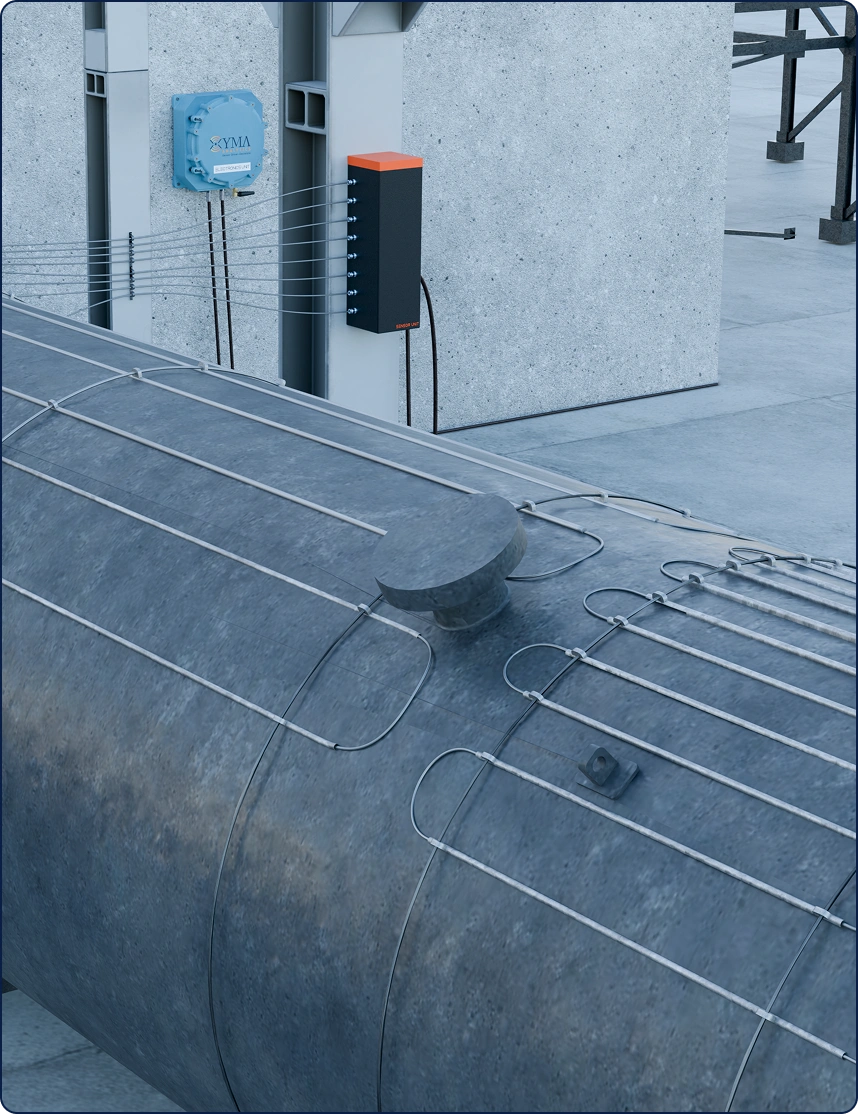
Magnetic clamp-on installation with zero welding or process penetration.

Measures actual shell skin temperature — not inferred process temperature.

Waveguide sensing eliminates electronics exposure to high-temperature corrosion.

A single waveguide supports up to 24 simultaneous measurement points

Continuous full-shell thermal
visibility paired with predictive
analysis — built for refinery and
gas plant teams.
Live 3D Heat Maps Continuous full-shell thermal visibility.
Predictive Alerts AI detects refractory degradation before failure occurs.
Trend Analysis Track thermal behaviour and refractory health over time.
Asset Intelligence Shared real-time insights for operations, inspection, and maintenance teams.
Measurable outcomes for sulphur recovery operations — from efficiency gains to compliance and asset lifespan.

Optimize H₂S conversion efficiency.

Detect hotspots before catastrophic failure.

Minimize manual inspections and sensor replacements.

Reduce COS, CS₂, and unconverted H₂S.

Improve refractory and shell lifespan.

Single dashboard for operations & reliability teams.
SRU reactors operate at extreme temperatures where refractory degradation and hotspots can lead to catastrophic shell failure. Continuous skin temperature monitoring reveals thermal anomalies early, protecting both equipment and personnel.
Without proper monitoring, refractory wear goes undetected, hotspots develop silently, and unplanned shutdowns or shell ruptures can occur — leading to costly downtime, safety hazards, and lost sulphur recovery efficiency.
μTMapS uses patented ultrasonic waveguide sensing to measure true skin temperature across the full shell. A single waveguide carries multiple measurement points, building live 3D heat maps without any electronics in the hot zone.
Yes. AI-driven analysis tracks thermal trends across the shell and predicts developing hotspots and refractory degradation before they reach a critical failure point.
The system reliably measures skin temperatures ranging from 100°C to 600°C and supports furnace process temperatures up to 600°C.
μTMapS can monitor Claus combustors, thermal reactors, reaction furnaces, waste heat boilers, sulphur condensers, and catalytic reactors.
A single ultrasonic waveguide supports up to 24 simultaneous measurement points, enabling dense, full-shell coverage with minimal installation footprint.
Yes. Because sensing is non-intrusive and ultrasonic, μTMapS performs reliably in flame, smoke, dust, and other harsh conditions that defeat optical and conventional sensors.
Book a technical consultation with XYMA's engineering team. We'll walk through your specific reactor configuration and recommend the right deployment.