SteelCase Study


Continuous Tundish Temperature Monitoring Improves Energy Efficiency and Product Quality
Temperature measurement is an integral part of the steelmaking process. Temperature monitoring in the tundish linings provides data that can be used to detect refractory wear. It also improve the tundish preheating process. Improvements in the preheating process can significantly save enormous amount of energy.
Temperature Monitoring is also important to achieve consistent product quality and high productivity. Various operating faults and quality defects can be avoided by continuous temperature monitoring. So, continuous temperature monitoring of tundish enables the use of advanced control strategies which can improve operating stability, energy efficiency, and product yield. These improvements results in large energy cost savings.
Challenges:
- In the continuous casting process of steel, the tundish is an intermediate vessel between the ladle and the continuous caster mold. Tundish fluid dynamics are guided by a set of dams and fixtures known as furniture, which are designed to maximize the amount of time that steel flows in the tundish.
- As these fixtures are utilized repeatedly throughout a continuous casting cycle, their performance may deteriorate, resulting in a change in steel residence duration in the tundish. This has a negative impact on the consistency of superheat management.
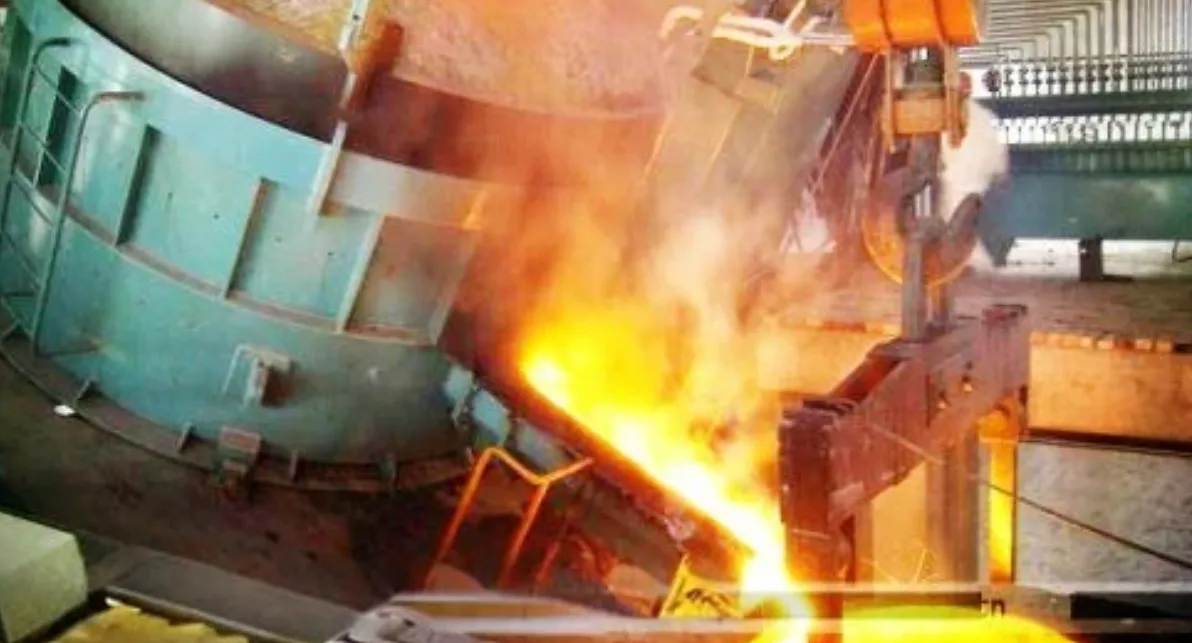
- Superheat in the casting process refers to the temperature increase of the molten metal above its melting point. Accurate measurement of this elevated temperature is required to reliably control the casting speed of the machine.
- If the superheat is too low, the caster is at risk of clogging and/or freezing the submerged entry nozzle (SEN), thereby terminating operations and damaging equipment. Conversely, if superheat is too high, an increased risk of various defects such as lower-quality microstructure and breakouts can ensue. A high superheat also increases energy losses, necessitating more cooling. Predictive models for fluid dynamics and tundish heat losses can be used to assess and improve superheat control and refractory wear.
Tundish Pre-Heating Process:
- Pre-heating tundish helps maintain the desired temperature of the molten metal as it passes through the tundish, ensuring consistent casting conditions and preventing premature solidification. Secondly, preheating reduces the risk of thermal shock to the refractory lining of the tundish, which could otherwise lead to cracking or failure.
- The process measures single-point temperature measurement using thermocouples are traditional and inapt for tundish pre-heating. Thermocouple are not meant for long-term use and are often discarded after a single use or after a relatively short period, typically within hours or a few days. They have short lifespan due to the harsh conditions they endure during the casting process.
- An accurate, information-rich, fast, minimally invasive and multi point temperature measurement system is highly desirable to measure continuous temperature measurements of tundish.
Real-Time Temperature Monitoring using Ultrasonic Waveguide Technology:
- XYMA's Multi-point temperature Sensor is capable of measuring high temperatures at multiple points in real-time across any hazardous environment.
- The edge computing unit in the XYMA Electronics Unit is capable of performing advanced computations to extract temperature data from the received ultrasonic signals.
- The output from the edge classifiers is transmitted to the dashboard using industrial standard, wireless (or wired) communication technology using a transmitting unit. The status can be monitored in the client DCS system and also can be displayed in XYMA's customizable dashboard.
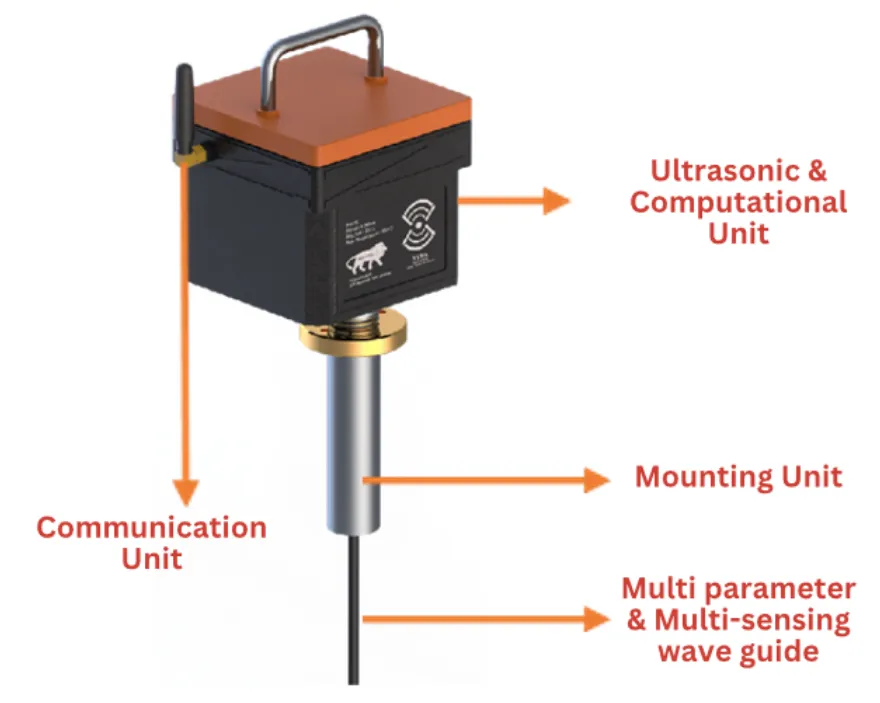
μTMapS Multi Point Temperature Mapping Sensor:
- μTMapS Multi Point Temperature Mapping Sensors helps to reduce the complex pre-heating procedure of tundish. These sensors utilize ultrasonic technology to accurately measure and monitor temperature distribution across multiple points on the tundish. From temperature data can be collected from multiple locations simultaneously, providing a comprehensive understanding of the temperature profile within the tundish.
- The sensor can also identify hot spots and cold spots within the tundish. This information allows operators to adjust heating elements or other interventions to ensure a more uniform temperature distribution, reducing the need for prolonged pre-heating to compensate for temperature variations.
- The control of superheat can be managed efficiently, With accurate temperature data, operators can optimize the heating system to ensure that the entire tundish reaches the desired temperature efficiently. By targeting specific areas that may require more heating and minimizing over-heating in other areas, the pre-heating process can be streamlined, saving time and energy.
- The system setup provides real-time feedback on temperature variations of tundish. This allows operators to make immediate adjustments to heating settings.
- This targeted approach not only reduces energy consumption but also prevent downtime, thereby enhancing overall productivity in steel manufacturing operations.
- Overall, the integration of μTMapS Multi Point Temperature Mapping Sensors streamlines the pre-heating process for tundishes, resulting in cost savings, improved efficiency, and enhanced product quality in steel Industry.
Conclusion:
- The optimal solution is to invest in long life time sensors which measure continuous spatial temperature of tundish. μTMapS Multi Point Temperature Mapping Sensors would be robust product to measure accurate spatial temperature of tundish.
- The system works with novelized technology and best industrial standards to detect the real time multi point and multi parameter measurement in a cost efficient way. By revolutionizing the pre-heating procedure with ultrasonic waveguide sensors, The Steel Industry majorly saves large energy cost and unlock their high potential in production.